Share of Freehold: What It Means, Pros & Risks (2026)
Share of freehold explained for 2026: how it works, pros like control and cheaper lease extensions, key risks, and checks to run before you buy.
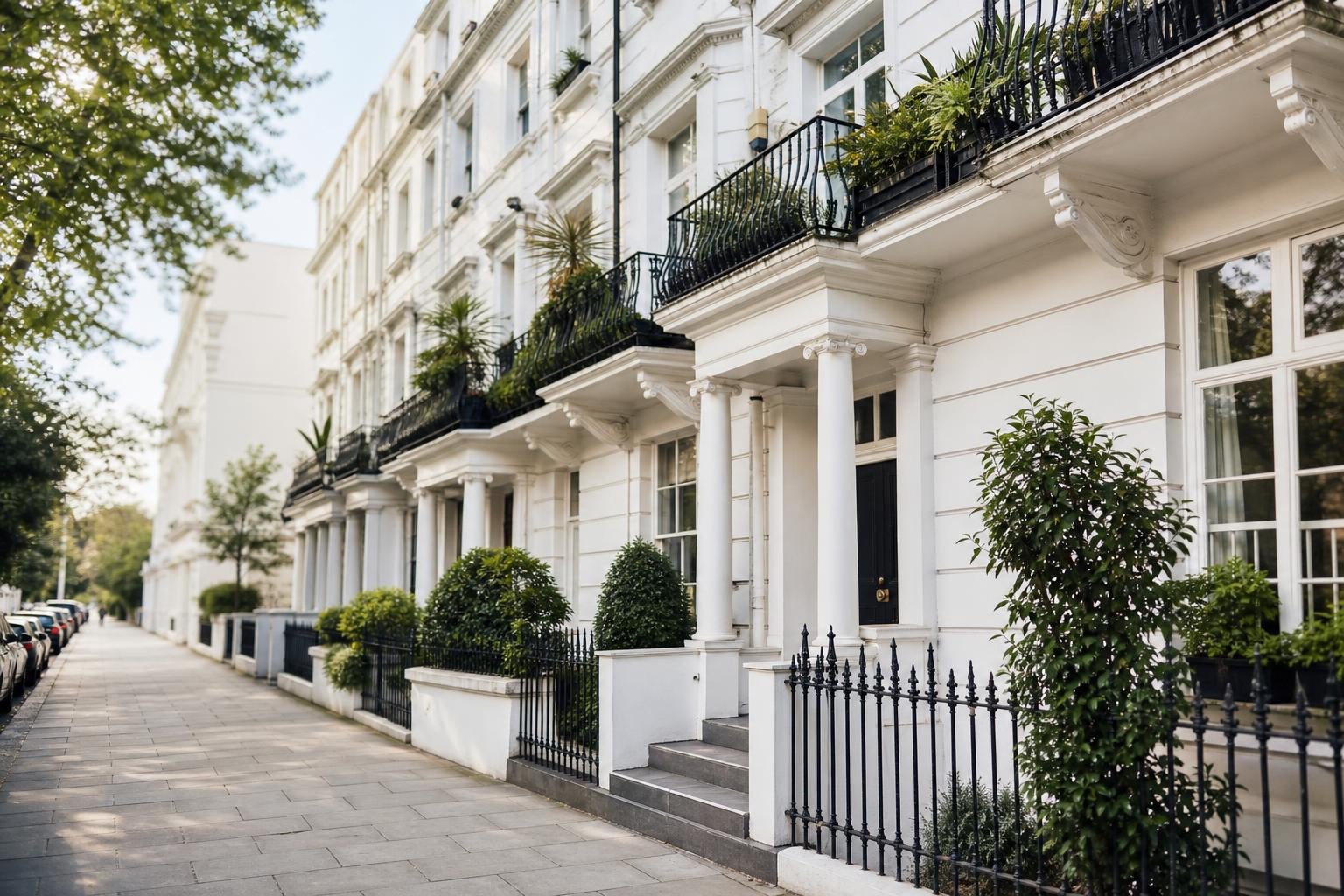
TL;DR: Share of freehold means you own your flat on a lease, but you also jointly own the freehold of the building, usually through a company. It gives you more control over management, cheaper lease extensions, and no external freeholder taking a profit margin. But it comes with real responsibilities, including Companies House obligations and governance challenges. You still own a lease, and the fine print still matters.
What Is Share of Freehold?
Share of freehold is a type of flat ownership where the leaseholders collectively own the freehold of the building and the land it sits on. You hold your individual flat on a lease (just like any other flat), but you and your neighbours are also the freeholder, giving you collective control over how the building is run.
In practical terms, this means you decide together on things like building insurance, maintenance, service charges, and when the roof gets fixed. There is no external landlord profiting from these decisions.
England has approximately 5 million leaseholders, and over 60% of London flats are leasehold. Share of freehold is one of the most common ways flat owners take back control from an external freeholder.
Thinking about buying a share-of-freehold flat? A BackStory report checks the lease, freeholder company, and building risks before you commit.
The Biggest Misconception: You Still Own a Lease
This is the single most important thing to understand. Many people see “share of freehold” on a listing and assume it means they own the flat outright, like a house. That is wrong.
All flats operate on leases. A share-of-freehold flat still comes with an underlying lease that sets out your rights, your obligations, and the terms of your ownership. The difference is that the freeholder (the company or group you belong to) is more likely to be reasonable when enforcing those terms, because the freeholder is you and your neighbours.
Another common mistake: people think owning a share of the freehold means owning a physical chunk of the building. It doesn’t. It means owning shares in the company that holds the freehold title. The lease is still the legal document that allocates your specific flat to you.
Practitioners on Reddit’s r/HousingUK regularly surface this confusion. In one thread, a user incorrectly suggested share of freehold meant “you pay rent to whoever owns the rest of the equity,” confusing it entirely with shared ownership, which is a completely different scheme.
How Share of Freehold Is Structured
There are two models, and the one your building uses matters.
Company ownership (the standard approach)
A limited company, often called a Residents’ Management Company (RMC), holds the freehold title. Each flat owner holds a share (or membership) in that company. When you buy a flat in the building, you also receive a share in the RMC. When you sell, the share transfers to the new buyer.
This is by far the most common structure, especially in buildings with more than four flats. The company has directors (usually volunteers from among the flat owners), files annual accounts with Companies House, and is legally responsible for the building’s management.
Direct ownership (small conversions only)
In buildings with up to four flats, the leaseholders can be named directly on the freehold title as co-owners. No company is needed. This is common in Victorian house conversions split into two or three flats.
The drawback of direct ownership is that selling becomes more complicated, because every co-owner must be involved in any change to the freehold title.
What the RMC actually does
The RMC manages the lease, maintains shared areas (hallways, roof, gardens, external walls), arranges buildings insurance, sets and collects service charges, and ensures compliance with the lease terms. Most RMCs appoint professional managing agents to handle the day-to-day work, though smaller buildings sometimes self-manage.
RMCs must hold service charge funds in a separate account, on trust for the leaseholders. This is a legal requirement, not optional good practice.
How You Get a Share of Freehold
There are three routes.
It comes with the flat when you buy
Some buildings are set up with share of freehold from the start. The developer creates the company, grants long leases, and transfers the freehold to the RMC before selling any units. When you buy, you receive both the lease and a company share.
Collective enfranchisement
This is the formal legal process by which existing leaseholders band together to buy the freehold from their landlord. It was established under the Leasehold Reform, Housing and Urban Development Act 1993.
The qualifying criteria: the building must be self-contained, have at least two flats, no more than 25% non-residential floor area, and at least 50% of the qualifying leaseholders must participate. Two-thirds of flats must be held on long leases (originally granted for over 21 years).
As a rough guide, if all leases exceed 80 years, the freehold typically costs 20 to 25 times the annual ground rent. For a building with 10 flats each paying £250 in ground rent, that works out to roughly £5,000 to £7,500 per flat.
One important change: the two-year ownership condition was removed from 31 January 2025, so you can now claim the freehold as soon as you are registered as the owner at HM Land Registry.
Worth noting that collective enfranchisement claims have collapsed 75% between 2016 and 2024, partly because permitted development changes made enfranchisement more expensive, and partly because leaseholders are waiting for further reform.
The freehold is offered for sale separately
Occasionally a freeholder puts the freehold on the open market, and existing leaseholders have a right of first refusal. This can be simpler than the enfranchisement process, though the price is negotiated rather than formula-driven.
Advantages of Share of Freehold
Control over management and costs
No external freeholder is taking a margin. Service charges reflect what it actually costs to run the building, not cost-plus-profit. You and your neighbours choose contractors, set budgets, and decide priorities.
Cheap lease extensions
This is one of the biggest financial advantages. The freehold company can grant a lease extension without the statutory negotiation process, often at minimal cost (sometimes just legal fees). For a standard leaseholder dealing with an external freeholder, extending a short lease can cost tens of thousands of pounds.
Peppercorn or zero ground rent
Share-of-freehold leases typically have a peppercorn ground rent (effectively nil). No escalating ground rent clauses, no doubling provisions, no surprises.
Potential value premium
Property experts disagree on the exact figure. Some suggest share of freehold can add up to 10% to a flat’s value, while others put it at a more modest 1%. The safe position: share of freehold removes the depreciating-lease drag that makes standard leaseholds harder to sell, and it improves buyer confidence. The actual premium depends on the quality of management, the lease terms, and the state of the building.
Problems and Risks: Where Share of Freehold Goes Wrong
This is where most guides stop at a tidy pros-and-cons list. The reality is messier.
Governance disputes
Most share-of-freehold problems are not legal problems. They are people problems. Unpaid service charges, disagreements over repair priorities, one owner blocking decisions, voting deadlocks in a four-flat building. These situations build slowly through missed payments, ignored maintenance, and co-owners who cannot agree.
Community forum discussions consistently flag this. As one user put it, share of freehold is “only possible in small buildings where neighbours can actually agree on doing this. And most of the trouble of this type of flats happened when you start have disagreements with your neighbours.”
If you’re buying into a building where one flat refuses to participate in the freehold company, that governance friction can follow you for years.
The Companies House risk nobody talks about
If your building uses an RMC (and most do), you are running a company. Companies House does not care that you are volunteers managing a six-flat block. The filing obligations are the same as for any business. Annual confirmation statements, accounts, director updates. Miss them and the penalties are automatic.
Here is the real danger: if the company is struck off the register, the freehold becomes ownerless. By law, it passes to the Crown through a process called escheat. A surprising number of resident-owned freehold companies have been struck off because nobody filed the paperwork. Getting the company restored and reclaiming the freehold is expensive, stressful, and entirely avoidable.
This is one of the highest-value checks you can run before buying a share-of-freehold flat. Is the company active on Companies House? Are the accounts filed? Who are the directors? These aren’t difficult questions, but they need asking. A BackStory sample report for a share-of-freehold flat in Hatton Garden shows exactly what this check looks like in practice.
Insurance is your responsibility
For share-of-freehold buildings, the RMC directors are personally responsible for arranging buildings insurance. That means setting the correct reinstatement value, confirming mortgagees’ interests are recorded on the policy, and renewing every year. Get it wrong and directors face personal liability.
This is not theoretical. Lenders check insurance, and an expired or undervalued policy can stall a sale or remortgage in the building.
You may still pay for lease extensions
A common assumption is that owning a share of freehold means lease extensions are free. They are cheaper, yes, but not always free. The freehold company’s directors have a duty to act in the company’s interest, which may mean charging a nominal premium. And if the lease terms require a specific process, that process still applies. A flat that seems like a great deal can carry hidden costs, as we explored in the flat that looked perfect.
Service charges still exist
Share of freehold does not eliminate service charges. The building still needs insurance, cleaning, repairs, and eventually major works. The difference is that you have a say in how the money is spent. But if the sinking fund is empty and the roof needs replacing, every flat owner is still liable for their share.
Cladding and building safety
Share-of-freehold buildings are not exempt from cladding and building safety concerns. If your building is over 11 metres and has combustible cladding, the RMC may be responsible for remediation. Checking EWS1 status is essential. Our Acton sample report covers a leasehold flat with live cladding remediation, illustrating how these issues play out in practice.
Mortgages and Lender Requirements
Share of freehold is generally treated the same as standard leasehold by mortgage lenders. The key is that the underlying lease must be acceptable. Most lenders require a remaining lease term of at least 80 to 90 years, and some want more.
The critical distinction: share of freehold vs. freehold flat
A “freehold flat” (where there is no lease at all, just outright freehold ownership of a flat within a building) is a different thing entirely. Many mainstream lenders refuse to lend on freehold flats because there is no standard lease framework to place their charge against. Share of freehold does not have this problem, precisely because each flat retains a proper lease.
Virgin Money, for example, confirms that share-of-freehold properties are acceptable provided there is an acceptable underlying lease upon which they can place their charge.
If you are buying a share-of-freehold flat and your lease is approaching 80 years, factor in the cost and timeline of extending it before your mortgage offer expires.
Share of Freehold vs. Leasehold vs. Commonhold vs. Freehold
Feature | Standard Leasehold | Share of Freehold | Commonhold | Full Freehold |
|---|---|---|---|---|
Applies to | Flats | Flats | Flats (very rare) | Houses |
You own a lease | Yes | Yes | No | No |
External freeholder | Yes | No | No | N/A |
Ground rent | Often payable | Usually peppercorn/nil | None | None |
Control over building | Limited | Collective | Collective | Full |
Lease extensions | Expensive (statutory) | Cheap (internal) | N/A | N/A |
Companies House duties | None for you | Yes (company) | Yes (association) | None |
Mortgage access | Standard | Standard | Limited (rare) | Standard |
Commonhold is worth understanding for context. It eliminates the lease entirely: each flat owner holds a freehold interest, and the building’s common parts are managed by a commonhold association. In many ways, commonhold is not dissimilar to share of freehold, just without the lease layer.
Some converted buildings that appear as share of freehold were previously commercial premises. If the building used to be an office, the conversion quality and permitted development history are worth scrutinising carefully.
Leasehold Reform: What’s Changing
The Leasehold and Freehold Reform Act 2024 introduces several changes that affect share-of-freehold buildings.
Already in force:
The two-year ownership rule for enfranchisement and lease extensions was removed from 31 January 2025.
Right to manage changes took effect from 3 March 2025: the non-residential limit rose from 25% to 50%, and freeholders can no longer recover legal costs from leaseholders making an RTM claim.
Coming but not yet in force:
Marriage value (the premium charged when a lease drops below 80 years) will be abolished, making lease extensions cheaper.
The draft Commonhold and Leasehold Reform Bill proposes banning most new leasehold flats and making commonhold the default for new buildings.
For existing buyers, share of freehold remains the practical reality for years to come. Commonhold is the direction of travel, but implementation will take time. If you are buying today, focus on the lease you are buying today.
What to Check Before Buying a Share-of-Freehold Flat
No listing agent will volunteer the problems. Here is what to verify before committing.
Check the lease. How long is it? What is the ground rent (and does it escalate)? What are the alteration and assignment clauses? What does the service charge mechanism look like?
Check the freehold company on Companies House. Is it active? Are confirmation statements and accounts filed? Who are the directors? If the company is dormant or at risk of being struck off, that is a serious red flag.
Confirm how shares transfer. Does your share in the RMC pass automatically on sale, or does it require a stock transfer form? If the mechanism is unclear, it can delay completion.
Review buildings insurance. Is the policy current? Does it cover the full reinstatement value? Are mortgagees’ interests noted?
Ask for service charge accounts. Are they reasonable for the building’s size and condition? Is there a sinking fund or reserve fund, and how much is in it?
Check for Section 20 notices. Has the RMC served notice of pending major works? These can mean significant bills shortly after you move in.
Ask about disputes. Are there any outstanding disagreements between co-freeholders, or any litigation involving the RMC?
Verify cladding and EWS1 status. If the building is over 11 metres, has an EWS1 assessment been completed? What were the results?
Check participation levels. Do all flat owners hold a share in the freehold company? Non-participating leaseholders can create governance friction and complicate decision-making.
This is a lot to check, and most of it happens before your solicitor gets involved. A BackStory report compiles lease, company, building safety, and risk data into a single, plain-English assessment, delivered within 24 hours for £30. You can browse sample reports to see exactly what’s covered.
Frequently Asked Questions
Is share of freehold the same as freehold?
No. With share of freehold, you still own a lease on your flat. The freehold is held collectively (usually by a company), and you own a share in that company. A full freehold means you own the property and land outright with no lease, which applies to houses, not flats.
Can I get a mortgage on a share-of-freehold flat?
Yes. Most lenders treat share of freehold the same as standard leasehold, provided the underlying lease is long enough (typically 80 to 90+ years remaining). The important distinction is between share of freehold (which has a lease) and a “freehold flat” (which doesn’t), as lenders often refuse the latter.
Do I still pay service charges with share of freehold?
Yes. The building still needs maintenance, insurance, and eventual major works. The difference is that you and your co-freeholders control how the money is spent, rather than an external freeholder setting the budget.
What happens if the freehold company gets struck off?
The freehold becomes ownerless and passes to the Crown. This is called escheat. Restoring the company and reclaiming the freehold is expensive and complicated. Always check the company’s status on Companies House before buying.
How much does it cost to extend a lease in a share-of-freehold building?
Much less than with an external freeholder. The RMC can grant extensions internally, often for just the cost of legal paperwork. However, the extension is not automatic, and some companies charge a nominal premium.
Is share of freehold better than standard leasehold?
In most cases, yes. You get more control, cheaper lease extensions, and typically lower ground rent. But it comes with governance responsibilities and Companies House obligations. A well-run share-of-freehold building is one of the better ownership structures for a flat in England. A badly run one can be worse than a competent external freeholder.
What is the difference between share of freehold and commonhold?
With share of freehold, you still own a lease. With commonhold, there is no lease: each owner holds a freehold interest in their unit, and common parts are managed by a commonhold association. Commonhold is extremely rare in England currently, though legislation aims to make it the default for new buildings in future.
How do I find out if a flat is share of freehold?
Check the property listing, which should state the tenure. Your solicitor can verify by checking the Land Registry title for both the flat (leasehold) and the building’s freehold. If a company is named as the freeholder, check Companies House to confirm it is a residents’ management company.
Buying a flat? Learn from my mistakes, not your own.
BackStory reads the records nobody reads (lease structure, planning history, lender red flags) and tells you in plain English what you're really buying. Human-reviewed, within 24 hours.
Get your report