
The story

Three flats. Almost every mistake in the book.

BackStory exists because I made the mistakes first. Over five years I bought three flats — in Leamington, Paris and London — and walked straight into problems that were, for the most part, knowable in advance. A leak still running after three years. A flat I can no longer sell. A surcharge nobody warned me about.

Most of it could have been avoided with one honest person guiding me through each purchase. The rest I'd at least have seen coming. That person didn't exist, so we built one.

I was lucky, but not in a life-changing way — a modest inheritance, every flat mortgaged on the smallest deposit the lender would allow. With so little cushion, every mistake hit at full force.

3 flats

Leamington · Paris · London

5 years

Every purchase mortgaged

£16k+

Still owed on one leak alone

The three flats

Each one taught me something expensive.

Here is the honest catalogue — building by building, problem by problem. The tags show how much each issue actually cost me, from a quiet drag on resale value to the ones that broke the bank.

High impactMediumDrag on value
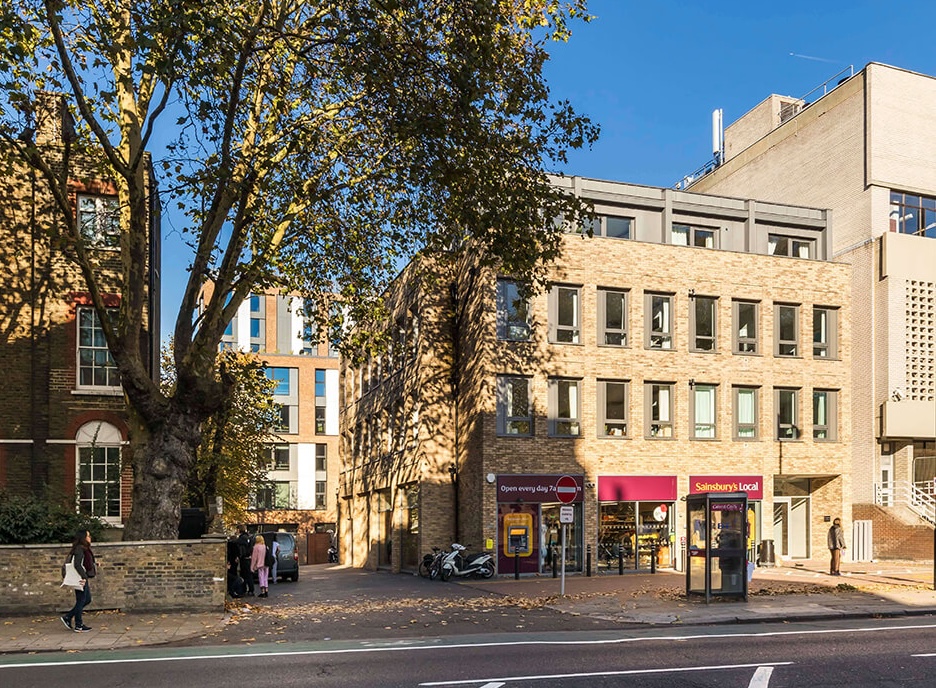
Leamington Spa building
Bought 5 years ago

Leamington Spa

First purchase · student flat

It looked incredible in the listing photos. Five years on it is the property I cannot sell, cannot easily re-mortgage, and cannot get the building to fix. Almost every problem was knowable before I exchanged — I just had no one to read the signs for me.

  • An office block dressed up as flats

    High impact

    I had no idea the building was converted from offices to residential. The conversion left it with terrible humidity and water-management, the kind of defect that never shows up on a viewing.

  • Three stacked lease layers

    High impact

    My flat sits under three separate leasehold layers, each owned by a different entity. The company in the middle has since gone bankrupt — which on its own makes the flat effectively unsellable today.

  • No longer mortgageable

    High impact

    54 flats, more than half of them let, with commercial shops on the ground floor. That was fine when I bought. Lender appetite has since shifted and the building is now extremely hard to mortgage — so my buyer pool has collapsed.

  • The nightclub that never closed

    Medium

    I was told the nightclub on the corner was closing. It wasn't, and it hasn't. Live music and late crowds three nights a week, right under a building full of students.

  • A student-let building

    Drag on value

    Most flats are rented to students, which makes the whole block far less attractive to owner-occupier buyers — and owner-occupiers are who you need when you eventually want to sell.

  • An unreachable management company

    Medium

    Getting 54 leaseholders and an unresponsive managing agent to agree on anything is close to impossible. We have been 'in the process of' replacing the front door for two years. The lift is broken more often than it works.

Leamington · deep dive

Why this one became the cautionary tale

Three problems overlap here — a complicated head-lease structure, practical management failures, and physical defects with an active leak. Each is survivable on its own. Seen together, every buyer and lender turns cautious, and that's precisely why the flat is so hard to move.

A tangled ownership structure
  • My flat isn't held directly from the freeholder — a superior head lease sits above my own lease, adding a layer between me and the freeholder.
  • An underlease can't grant rights greater than the head lease above it, so conveyancers raise extra enquiries every time someone tries to buy.
  • With the mid-layer company bankrupt, the superior landlord is hard to identify and obligations between the leases don't line up cleanly.
Selling and mortgaging it
  • Buyers and their solicitors prefer straightforward freehold or direct leasehold — complex structures slow transactions and collapse sales.
  • Lenders get nervous about short head-lease terms, incomplete documentation and absent superior landlords. Mine ticks all three.
  • Extending my own lease could need the freeholder and the head leaseholder both at the table — potentially several legal parties at once.
Defects and the running leak
  • An inspection identified construction defects contributing to water ingress, but the intrusive investigation was scaled back to limited testing.
  • The true source may still not be conclusively established, so liability and funding remain unresolved.
  • Where the fault sits in communal structure, the freeholder or managing agent should be responsible — but the layered leases make even that unclear.

How I'd rank the risks today

High concern
  • The head-lease arrangement
  • Possible inability to extend the lease alone
  • Difficulty selling or mortgaging
  • Unresolved water ingress
Medium concern
  • Management structure complexity
  • Unclear repair responsibilities
  • Delays getting information
Lower concern
  • Ordinary leasehold administration
  • Service-charge arrangements
  • Standard landlord permissions
Paris building
Bought as a buy-to-let

Paris

Second purchase · rented out

A smaller flat, a smaller catalogue of problems — but each one still cost me real money and real sleep. Two of the three I could only have discovered by living with the building, but one was sitting in plain sight if I'd known to look.

  • A parking ramp built for toy cars

    Drag on value

    The ramp down to the parking is so narrow that only a small car can physically use the space. That quietly knocks a chunk off the resale value, and it was measurable before I ever signed.

  • Management gone silent

    Medium

    The building's management company simply stopped responding. No replies, no meetings, no maintenance decisions — the building drifts while problems pile up.

  • A tenant who stopped paying

    High impact

    My second tenant has not paid rent in over a year. Recovering it through the French system is slow, expensive and far from guaranteed.

London building
Bought as my main residence

London

Third purchase · main home

This is the one I live in. By the third purchase I assumed I'd learned enough to avoid the traps. I hadn't — I just met new ones, and the bill is still arriving.

  • A stamp-duty surcharge I didn't see coming

    High impact

    Because this wasn't my first property, I owed the additional stamp-duty surcharge. Nobody flagged it early, so it landed as a five-figure surprise on completion.

  • Freeholder and managing agent — same family

    High impact

    The managing agent was the freeholder's own family. The conflict of interest was total, and the service charge kept climbing. We eventually won the Right to Manage — but it was stressful, costly and slow.

  • A 'fixed' leak that's three years old

    High impact

    There was a leak before we moved in. We were told it had been fixed. It hadn't — three years later it is still active in my living room. The building is technically under warranty, but the agent kept ordering ever-more-expensive surveys instead of fixing it, so we leaseholders took it on ourselves.

  • A £16k+ excess for a building defect

    High impact

    The leak was finally identified as a building defect. Even so, we still have to pay the policy excess — which, with inflation, is now north of £16,000 out of our own pockets.

  • An undisclosed approved extra floor

    High impact

    Planning permission for an additional floor on top of the building had already been approved — and none of it was disclosed during the sale. It was sitting in the local planning portal the whole time, with all the construction disruption and risk that implies.

The point of all this

Most of it was avoidable. Some of it wasn't.

I'm not going to pretend a report would have saved me from everything. But the honest split is striking — and it's the whole reason BackStory exists.

A report would have flagged this before I offered

  • The office-to-residential conversion and its damp problems
  • Three stacked lease layers and a fragile head-lease structure
  • Commercial units and a high let-ratio that scare off lenders
  • The nightclub that was never actually closing
  • A parking ramp too narrow for a normal car
  • The additional stamp-duty surcharge on a second property
  • A managing agent that was the freeholder's own family
  • A 'fixed' leak that had never been fixed
  • An approved extra-floor development sitting undisclosed in the planning portal

Some I'd still have walked into — but eyes open

  • A mid-layer freeholder company going bankrupt years later
  • Lender appetite shifting until the building became unmortgageable
  • A managing company simply ceasing to respond
  • A tenant deciding to stop paying rent for over a year

Even these change with warning. Knowing a building's let-ratio, a managing agent's track record or a tenant's risk profile up front means you price it in, negotiate, or walk — instead of being ambushed years later.

Every one of these was knowable, or at least askable, by someone whose only job was to look out for the buyer. I didn't have that person. BackStory is the thing I wish I'd had three times over.

Don't buy my mistakes. Buy with the report I never had.

Drop in the address you're considering. Your human-reviewed BackStory report lands within 24 hours.

Get the report